Home / Articles / What Are Bamboo Mattresses?
Bamboo mattresses can sound greener and simpler than they really are. In practice, the term usually refers to a mattress cover, topper, or memory foam layer that uses bamboo-derived fabric or bamboo charcoal infusion rather than a mattress made from solid bamboo.
This refreshed guide explains what sellers usually mean, what the tradeoffs are, and how to make a cleaner buying decision without falling for too much marketing.
Quick verdict
Bamboo mattresses can be worth considering if you want a softer sleep surface, a bamboo-based cover, or a memory foam mattress marketed for cooling or odor control. But most “bamboo mattresses” are still mostly foam and synthetic materials, not a fully bamboo-built mattress.
That does not make them automatically bad. It just means the eco story is often partial. If sustainability is your top priority, look closely at what part is actually bamboo and what part is standard polyurethane foam.
Best for and skip if
Best for
- Shoppers who want a bamboo cover, topper, or bamboo charcoal-infused foam
- People who prefer memory foam feel over springs
- Anyone building out a lower-fuss bamboo bedding setup with guides like our bamboo bedding and sleep hub
- Buyers who want lots of online reviews to compare before choosing
Skip if
- You want a mattress made mostly from natural materials with minimal foam
- You dislike the feel of memory foam
- You are expecting bamboo alone to solve overheating, odor, or durability issues
- You want a traditional innerspring mattress with coils
Pros and cons of bamboo mattresses
Pros
- Bamboo-derived fabrics are popular because they can feel soft and breathable
- Bamboo grows quickly compared with many conventional timber crops
- Bamboo charcoal-infused foam is often marketed for odor control and moisture management
- Many options are widely available online from major brands
- Mattress toppers and covers can be a cheaper way to test the category
Cons
- Most bamboo mattresses are not actually made primarily from bamboo
- Many products still rely heavily on synthetic foams
- Eco claims can be overstated or vague
- Cooling performance varies a lot from one mattress to another
- Some shoppers may prefer latex, coils, or hybrid builds instead
What is a bamboo mattress?
Firstly, you will not usually find mattresses completely made of bamboo, at least not in the normal mattress sense. Today, bamboo mattresses generally show up in three forms.
- Bamboo mattress toppers — thick layers placed on top of a mattress to add cushioning and sometimes a cooler or fresher feel.
- Bamboo charcoal-infused memory foam mattresses — foam mattresses or foam layers infused with bamboo charcoal, usually marketed for odor control and airflow.
- Combination memory foam mattresses — multi-layer designs that may pair traditional memory foam with a denser charcoal-infused foam base or layer.
Notably, bamboo mattresses do not typically include bamboo stalks, slats, or a fully plant-based structure. In most cases, the bamboo part is the cover fabric, rayon/viscose derived from bamboo, or bamboo charcoal added to foam.
Are bamboo mattresses good?
They can be, depending on what you actually want from a mattress.
People who like bamboo mattresses, toppers, or covers often like them for a few main reasons:
- They want a somewhat more eco-conscious option than conventional bedding, especially if bamboo replaces some cotton or is used in the cover.
- They want help with odor and moisture management. Bamboo charcoal is often used for this, though results vary and the claims should be taken as modest rather than magical.
- They want a cooler-feeling surface than some older memory foam beds, although cooling depends on the full design, not just the word “bamboo.”
- They like the feel of memory foam and want a topper or mattress with broad online availability.
Some product descriptions also make strong claims about bamboo being anti-bacterial, anti-fungus, or anti-mold. There is a grain of truth behind bamboo’s natural properties as a plant, but once materials are heavily processed into textiles or mixed into foam, those benefits should not be treated as a guaranteed health feature. It is better to think in terms of comfort, fabric feel, and possible odor control rather than medical or sanitation promises.
How eco-friendly are bamboo mattresses, really?
This is where it helps to stay honest. Bamboo itself is a fast-growing plant, and that can make it a more resource-efficient raw material than slower-growing trees in some product categories. Faster growth can mean less land pressure over time and a renewable feedstock that rebounds quickly.
But a bamboo mattress is usually not a simple block of natural bamboo. Most of these products still contain polyurethane foam, adhesives, synthetic fabrics, or fiberglass-free fire barriers made from other materials. If the cover uses rayon or viscose from bamboo, that also involves industrial processing.
So the greener answer is usually: better in some ways, not automatically low-impact overall.
If sustainability matters to you, read the material breakdown carefully and compare bamboo options with other categories too. You may also want to look at related bedding guides such as our best bamboo sheets guide and bamboo sheets FAQ.
How to choose a bamboo mattress
- Check what “bamboo” actually means. Is it a bamboo cover, bamboo charcoal-infused foam, or just a marketing term in the product name?
- Decide whether you want a full mattress or a topper. A topper is cheaper and easier if you only want to change surface feel.
- Look at thickness and firmness. Foam feel can vary a lot between a 2-inch topper and a 12-inch mattress.
- Read cooling claims carefully. No mattress sleeps cool for everyone. Room temperature, sheets, body type, and bed frame all matter.
- Read the warranty and return terms. Mattress buying is easier when you have some room to test it.
- Use review platforms wisely. Large retailers like Amazon can be useful for scanning patterns in reviews, not just star counts.
How long does a bamboo mattress last?
Many leading bamboo mattress brands offer a 10-year warranty, though warranties are not the same thing as guaranteed real-world lifespan.
According to the Sleep Foundation, most mattresses last about 7 to 10 years. That range depends on materials, usage, body weight, and how well the mattress is supported and maintained.
A bamboo memory foam mattress should generally fall in that same ballpark. Heavy use, poor support, repeated spills, and constant jumping-from-small-humans can shorten its life quite a bit.
How to clean a bamboo mattress
Cleaning a bamboo mattress is usually similar to cleaning other memory foam mattresses: go gently, avoid soaking it, and let it dry fully before using it again.
- Remove all bedding, covers, and protectors.
- Place the mattress on a hard floor if possible so you can clean around it easily.
- If there is odor, lightly sprinkle baking soda across the surface and leave it for several hours.
- Vacuum the mattress using a soft brush attachment, including the seams and edges.
- Spot-clean stains with a mild laundry-safe cleaner or lightly damp cloth. Avoid bleach and avoid saturating the foam.
- Let the mattress air out completely. If you used any cleaner, wait until it is fully dry before remaking the bed.
Done properly, this is more about maintenance than deep restoration. If the mattress is badly soaked or damaged, replacement may be more realistic than aggressive cleaning.
Care tips to help it last longer
- Use a mattress protector or washable cover
- Rotate it if the manufacturer recommends it
- Make sure the bed frame gives proper support
- Clean spills quickly before they sink deeper into the foam
- Air it out occasionally if humidity or odor is a recurring issue
Who makes bamboo mattresses?
Bamboo mattresses are still a narrower category than standard foam or hybrid mattresses, but there are several recognizable brands selling products in the space. Some of the more common names include:
- LUCID
- Zinus
- Inofia
- BedStory
- Signature Design by Ashley
- Brentwood Home
- Pure Bamboo
- Elegant Comfort
- Niagara Sleep Solution
- Cariloha
- Zen Bamboo
How much do bamboo mattresses cost?
Prices vary by type, thickness, and size.
In the original roundup, popular bamboo charcoal-infused memory foam mattresses often fell roughly in the lower-to-mid budget range, while bamboo toppers and covers were typically cheaper. Exact pricing changes constantly, so it is smarter to compare current listings and recent reviews than to rely on old numbers.
Generally speaking:
- Full mattresses cost more and vary widely by thickness and construction
- Toppers and covers are the more affordable entry point
- Brand recognition alone does not always mean better materials
Popular bamboo mattress picks people often compare
If you are browsing widely reviewed options, these are some of the products people commonly compare online:
- Zinus — 12 Inch Green Tea Memory Foam Mattress
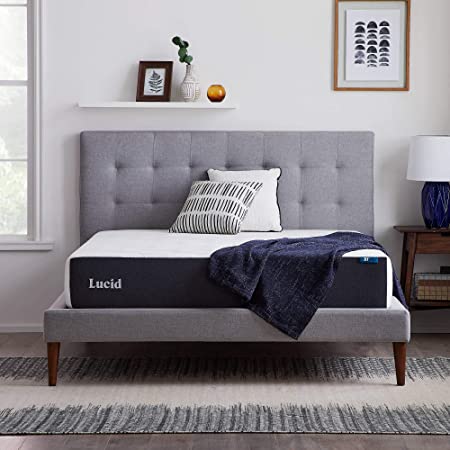
- LUCID — Memory Foam Firm Feel Mattress
- Brentwood Home — Charcoal-Infused Hybrid Mattress
- LUCID — 3 Inch Bamboo Charcoal Memory Foam Mattress Topper
- Zen Bamboo — Mattress Pad Cover
- BedStory — Bamboo Charcoal Mattress Topper
As always, compare materials, return policies, and recent review trends instead of assuming every “bamboo” label means the same thing.
FAQ
Do bamboo mattresses have springs?
Usually no. Most products in this category are memory foam mattresses, foam toppers, or covers rather than traditional innerspring beds.
Are bamboo mattresses cooling?
Some sleepers say they feel cooler than older dense foam mattresses, but cooling depends on the whole build. The cover, foam density, room temperature, sheets, and your body all matter.
Are bamboo mattresses antibacterial?
That claim is often overstated. Some bamboo-related materials are marketed this way, but once bamboo is processed into textiles or added to foam, the effect should not be treated as a guaranteed sanitation or health benefit.
Do bamboo mattresses smell less?
Bamboo charcoal-infused foam is often marketed for odor absorption. Some users report a fresher feel, but it is best seen as a potential comfort feature, not a cure-all.
Is a bamboo topper different from a bamboo mattress?
Yes. A topper sits on top of your existing mattress and changes the feel. A bamboo mattress is usually a full foam mattress or layered sleep system that uses bamboo-related materials somewhere in its construction.
Takeaway
Bamboo mattresses are not a scam, but they are often misunderstood. In most cases, you are buying a foam mattress, topper, or cover that uses bamboo-derived fabric or bamboo charcoal rather than a mattress made mainly from bamboo itself.
If you like memory foam and want a softer, widely available option with a somewhat greener angle, this category can make sense. If you want the most natural build possible, though, dig much deeper into the materials before buying.
If you are exploring the wider bamboo-at-home world, you can also read our guides on bamboo pillows, bamboo toilet paper, bamboo cutting boards, bamboo steamers, bamboo blinds, bamboo straws, and bamboo toothbrushes.
Want more ideas? Browse our full article hub or send a topic request to ContactUs@tropicjade.com.