
Home / Articles / The Ultimate Bamboo Toilet Paper FAQ
Updated March 25, 2026: We refreshed this guide for clarity, current best practices, and easier scanning.
Use this guide to make a clean buying decision, understand the tradeoffs, and see where bamboo toilet paper fits inside the bigger bamboo category.
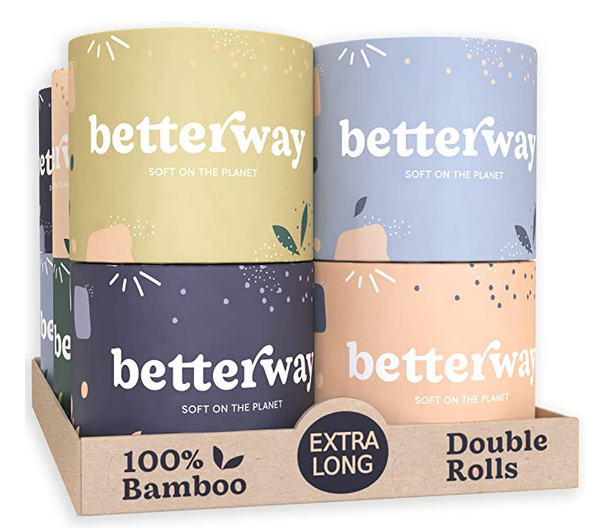
Quick verdict
Bamboo toilet paper can be a solid lower-impact alternative to conventional virgin-tree toilet paper. In many cases, it is soft, flushable, and easy to use just like standard toilet paper. The big advantage is the raw material: bamboo grows quickly and can reduce pressure on slower-growing forests.
That said, it is not automatically perfect. Manufacturing, packaging, shipping distance, bleaching methods, and whether a brand mixes in other fibers all affect the real-world footprint. If you want the simplest rule: bamboo toilet paper is usually a better pick than conventional virgin paper, and often competitive with recycled options, but the most sustainable choice still depends on the details.
Best for and skip if
Best for
- Shoppers trying to reduce reliance on virgin tree pulp
- People who want something softer than many recycled-paper options
- Homes looking for plastic-free or lower-plastic bathroom swaps
- People building out a more sustainable routine through our bamboo bathroom and personal care guides
Skip if
- You want the absolute lowest-cost toilet paper above all else
- Your priority is buying locally made paper with the shortest shipping footprint
- You already like a high-quality 100% recycled toilet paper and do not need a softer alternative
- Your plumbing is unusually sensitive and you need to be extra cautious with any toilet paper brand
Pros and cons of bamboo toilet paper
Pros
- Bamboo is a fast-growing grass rather than a slow-growing tree
- Often softer than many recycled toilet paper options
- Usually biodegradable and septic-safe when used normally
- Can help reduce demand for conventional virgin wood pulp
- Available from a growing number of mainstream brands
Cons
- Not every product is 100% bamboo
- Some brands use plastic packaging or excessive shipping materials
- It is not automatically better than a well-made 100% recycled option
- Performance varies by ply, texture, and brand
- Eco marketing can overstate benefits, so it pays to read the fine print
What is bamboo toilet paper?
Bamboo toilet paper is simply toilet paper made from bamboo fiber instead of conventional wood pulp, or instead of recycled paper. The manufacturing process is broadly similar to regular toilet paper production. The biggest difference is the source material.
Can you make toilet paper from bamboo?
Yes. Bamboo is a fast-growing grass with fiber characteristics that make it useful for paper products, including toilet paper. That is why it shows up in tissues, paper towels, and other disposable household goods too.
Why use bamboo toilet paper?
For most people, the appeal comes down to a few practical points.
- Lower reliance on trees: Bamboo grows much faster than the trees commonly used for virgin paper pulp.
- Comfort: Many shoppers find bamboo toilet paper closer in feel to standard toilet paper than rougher recycled options.
- Easy swap: It fits into daily life without requiring a totally different routine.
It is also one of those products that can make a bathroom cabinet feel a little less wasteful, which matters if you are trying to make everyday choices line up better with your values.
Is bamboo toilet paper better than recycled?
Not always, but sometimes.
Some recycled toilet paper is not made from 100% recycled material. Brands may blend recycled fiber with virgin pulp to improve softness and strength. Fully recycled toilet paper can be an excellent environmental choice, but a common complaint is that it may feel rougher than premium conventional brands.
Bamboo toilet paper is often chosen because it can offer softness closer to regular toilet paper while still using a rapidly renewable raw material. In practice, the comparison comes down to what you care about most:
- If softness is your top priority: bamboo often has an edge over many recycled options.
- If using existing recovered fiber is your top priority: 100% recycled may still be the better fit.
- If you want a middle ground: bamboo can be a strong compromise between comfort and lower-impact sourcing.
The honest answer is that bamboo is not automatically superior in every case. It is just often better than conventional virgin paper, and competitive with recycled paper depending on the product.
Is bamboo toilet paper biodegradable?
Yes. Like most toilet paper, bamboo toilet paper is generally biodegradable. It is usually made largely or entirely from plant fiber pulp, which breaks down over time.
Still, biodegradable does not mean you should flush excessive amounts at once, and it does not mean every wrapper or core is compostable. Check the brand packaging and product details.
Is bamboo toilet paper better for the environment?
Compared with conventional virgin-tree toilet paper, bamboo toilet paper is usually the more eco-friendly option. Bamboo grows quickly, can be harvested on shorter cycles, and may reduce pressure on slower-growing forests.
But it is worth resisting the marketing fantasy that one swap fixes everything. A product can use bamboo and still come with emissions from processing, shipping, bleaching, and packaging. Some brands do much better than others.
In general:
- Bamboo is usually better than standard virgin paper.
- Bamboo may be similar to or slightly better than some mixed-fiber recycled products.
- Bamboo is not automatically better than every 100% recycled option.
If you care about sustainability, look beyond the front-label buzzwords and check for fiber content, packaging choices, and transparency.
Is bamboo toilet paper soft?
Usually, yes. Bamboo toilet paper is often described as soft and fairly close to regular mainstream toilet paper. Compared with many recycled-paper options, it is commonly perceived as softer.
That said, softness depends on the brand, ply count, embossing, and whether the paper is blended with other fibers. Not every bamboo roll feels luxurious, and not every recycled roll feels rough.
Can you flush bamboo toilet paper?
In most cases, yes. Bamboo toilet paper is generally made to be flushable in the same everyday sense as standard toilet paper, and many brands market it as septic-safe.
Still, use common sense:
- Older plumbing can be more sensitive
- Septic systems vary
- Using too much paper at once can cause issues regardless of material
If your home already struggles with clogging, be cautious with any brand and test small amounts first.
How is bamboo toilet paper made?
Once harvested, bamboo is processed into fiber. That fiber is turned into pulp, then soaked, pressed, and formed into paper. After that, the paper is dried in long sheets, rolled, cut, and packaged for sale.
The overall process is quite similar to regular toilet paper manufacturing. The main difference is that the pulp comes from bamboo rather than conventional wood sources.
How to choose bamboo toilet paper
If you are shopping for bamboo toilet paper, these are the things worth checking before you buy.
- Fiber content: Look for whether it is 100% bamboo or blended with other fibers.
- Packaging: Paper-wrapped rolls or plastic-free shipping are a meaningful plus.
- Bleaching and additives: Simpler processing is usually preferable when clearly disclosed.
- Softness and strength: Read product details carefully, since comfort varies a lot by brand.
- Septic compatibility: Check the label if that matters for your home.
- Brand transparency: Companies that explain sourcing and materials clearly tend to be easier to trust.
If you are browsing products online, you may end up starting at Amazon, but it is still worth reading descriptions closely rather than assuming every bamboo option is equally sustainable.
Care and everyday use
There is not much special care required with bamboo toilet paper, which is part of the appeal. Still, a few habits help:
- Store rolls in a dry place to prevent moisture damage
- Do not assume wrappers, labels, or shipping materials are all compostable
- Use normal amounts and avoid flushing large wads at once
- If you are trying a new brand, test performance before buying in bulk
Where bamboo toilet paper fits in a bigger bamboo routine
If you are exploring lower-impact home swaps, bamboo toilet paper usually fits best as one practical step, not a purity test. You can also explore our broader bamboo bathroom products guide for related ideas.
For nearby categories, you might also like our bamboo toothbrush FAQ, or branch out into other home guides like bamboo cutting boards, bamboo steamers, bamboo blinds, and bamboo sheets.
Final thoughts
Bamboo toilet paper is a simple swap that can make sense for people who want to move away from conventional virgin-tree paper without sacrificing too much comfort. It is usually biodegradable, usually flushable, and often softer than recycled alternatives.
Just keep the tradeoffs in view. The best bamboo toilet paper is not merely the one with the greenest branding. It is the one that pairs bamboo fiber with sensible packaging, clear sourcing, and honest claims.
Have another question?
If there is something we should add in the next update, contact us or send a topic idea to ContactUs@tropicjade.com.