Bamboo pillows are popular because they promise a mix of softness, support, and a cooler feel than many traditional pillows. But the name can be misleading: most “bamboo pillows” are not filled with bamboo. Usually, the bamboo part is the outer cover, while the inside is shredded memory foam or a solid foam core.
This guide gives you a practical overview of what bamboo pillows are, where they work well, where they disappoint, and what to know before you buy.
Bamboo pillow reviews — what buyers should know in 2026
Quick verdict: Bamboo pillows can be a good fit if you want an adjustable, supportive pillow with a soft cover and decent airflow. They are less appealing if you dislike memory foam feel, are sensitive to initial odors, or want a product made mostly from simple natural materials.
For many shoppers, the biggest surprise is that a bamboo pillow is usually a memory foam pillow with a bamboo-derived cover, not a pillow made entirely from bamboo.
Pros
- Adjustable feel: Many shredded foam models let you add or remove fill.
- Supportive: They often contour better than basic polyfill pillows.
- Soft cover: Bamboo-derived fabrics can feel smooth and breathable.
- Moisture handling: Covers are often marketed for airflow and wicking.
- Widely available: Easy to compare brands online, including on Amazon.
Cons
- Not really all bamboo: The name can overstate how much bamboo is actually in the product.
- Off-gassing: New foam pillows can have a temporary odor after unpacking.
- Can sleep warm: Memory foam still retains heat more than some natural fills.
- Flattening or clumping: Lower-quality fill may lose loft over time.
- Eco tradeoffs: Foam and rayon/viscose processing are not the most low-impact material choices.
If you are also comparing other sleep products, see our broader bamboo bedding and sleep guides. If a dedicated roundup is published, a best-of comparison belongs here too.
Are bamboo pillows good?
They can be good, but not for everyone. A well-made bamboo pillow can feel comfortable, supportive, and more customizable than a basic standard pillow. Many use shredded memory foam, which molds around the head and neck and can help some sleepers find a better sleeping position.
That said, whether a bamboo pillow is “good” depends on what you want. If you like a moldable pillow and don’t mind foam, it may be a solid option. If you want a simple pillow made from mostly natural materials, bamboo pillows may fall short because the fill is often synthetic foam and the “bamboo” fabric is usually processed bamboo-derived rayon or viscose.
Best for: side sleepers, combo sleepers, people who like adjustable loft, and shoppers who want more structure than a down-alternative pillow.
Skip if: you dislike foam, are very sensitive to odor, want a machine-washable whole pillow, or prefer more transparent natural-material products.
Bamboo pillow reviews: common complaints
Across buyer feedback, the same issues come up again and again.
1. Off-gassing after opening
Some new bamboo pillows smell when first removed from the packaging. This is usually related to the foam, not the bamboo cover. In most cases, the smell fades after 24 to 48 hours in a well-ventilated room, though some products can take longer.
2. They are not fully bamboo
This is probably the most common frustration. The term “bamboo pillow” often refers only to the cover fabric, not the fill. If you are shopping for a truly low-plastic or mostly plant-based pillow, read the materials list carefully.
3. Flattening over time
Some shredded foam pillows lose loft, especially cheaper ones. Regular fluffing helps, but lower-quality fill can become uneven or compressed.
4. Cooling claims can be oversold
Many bamboo pillows are advertised as cooling. Some do feel cooler than dense synthetic pillows, especially because of the cover fabric and air pockets in shredded foam. But they are not magic. Memory foam can still trap heat, so hot sleepers should keep expectations realistic.
What is a bamboo pillow?
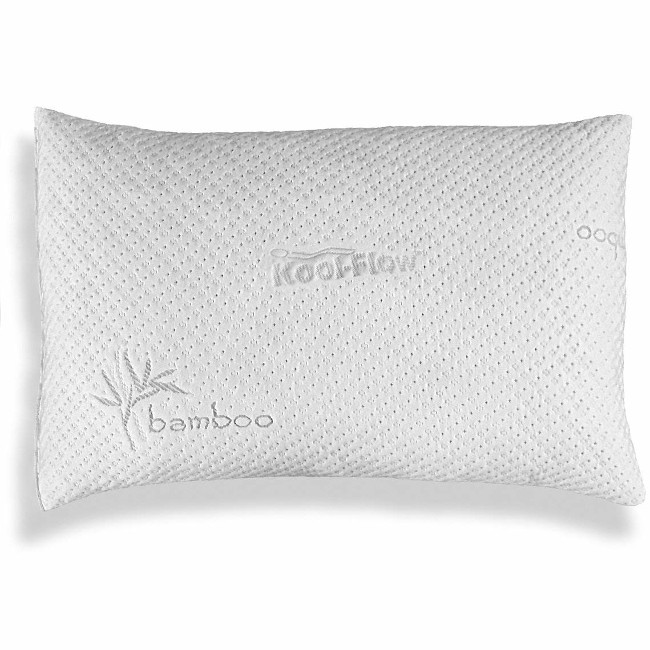
A bamboo pillow is typically a pillow with two main parts. The inside is usually shredded memory foam, though some brands use a single solid piece of foam. The outer cover is often made from a blend that includes bamboo-derived fibers and polyester.
So the name does not usually mean the whole pillow is made from raw bamboo. In practice, it usually means the cover includes fabric made from bamboo-derived material.
What are bamboo pillows made of?
Most bamboo pillows are made from:
- Fill: shredded memory foam or solid memory foam
- Cover: a fabric blend that may include bamboo-derived rayon or viscose, plus polyester or other fibers
Some brands highlight foam certifications such as CertiPUR-US, which can be one useful screening factor when comparing foam products.
From an eco perspective, bamboo is fast-growing, but that does not automatically make every bamboo pillow highly sustainable. Processed bamboo fabrics and polyurethane foams still involve manufacturing impacts, so it is worth looking beyond the marketing.
Are bamboo pillows comfortable?
For many people, yes. Bamboo pillows are often designed to be adjustable and shapeable, which can make them feel more personalized than standard pillows. Shredded memory foam creates a moldable feel, and many sleepers like the balance of softness and support.
Back and stomach sleepers often prefer a thinner pillow, while side sleepers usually need more loft. A bamboo pillow with removable fill can be useful because you can adjust it to better match your sleep position.
Some designs also have a curved side and a flatter side, giving you more options for how the pillow sits under your head or neck.
Are bamboo pillows good for your neck?
They can be, especially if the loft and firmness are adjusted correctly for your sleep position. The main advantage is support: shredded memory foam can conform around the head and neck better than a pillow that collapses flat.
That does not mean every bamboo pillow will work for every neck issue. Comfort is highly individual, and the wrong height or firmness can still feel uncomfortable. The safest takeaway is that a supportive, adjustable pillow may help some people sleep in better alignment than a worn-out pillow.
Can you be allergic to bamboo pillows?
Most people are unlikely to be allergic to the bamboo-derived cover itself, and many brands market these pillows as suitable for sensitive sleepers. They may also be less hospitable to dust buildup than some traditional fills when kept clean and dry.
Still, it is better not to overstate this. Reactions can happen to many parts of a pillow, including fragrances, detergents, foam components, or dust accumulation over time. If you are highly sensitive, check the full materials list and washing instructions before buying.
Do bamboo pillows stay cool?
Some stay cooler than traditional foam pillows, but results vary. The cover fabric may feel breathable, and shredded foam allows more air movement than a dense solid slab of foam. Moisture-wicking claims may also be partly true depending on the fabric blend.
But cooling performance is often exaggerated in marketing. A bamboo pillow may feel cooler, yet it is not guaranteed to stay cool for every sleeper all night, especially if the fill is dense foam.
Do bamboo pillows smell?
They can smell when new, especially right out of the package. This temporary odor is usually from foam off-gassing rather than the bamboo cover. In many cases it fades within 24 to 48 hours after airing out.
With regular care, bamboo pillow covers may stay fresher than some other fabrics, but it is better to avoid sweeping claims about being completely odor-proof or antibacterial. Cleanliness still depends on washing habits, room humidity, and the pillow’s overall construction.
Do you need pillowcases for bamboo pillows?
No, not strictly. Most bamboo pillows already come with an outer cover, and some brands suggest using the cover on its own to maximize airflow.
That said, you can use a regular pillowcase if you want easier washing, a different texture, or a better match for your bedding. Since most bamboo pillows follow standard pillow sizing, store-bought pillowcases often fit just fine.
How are bamboo pillows made?
The foam fill is manufactured separately, then inserted into an outer cover made from fabric that may include bamboo-derived fibers. Turning bamboo into soft textile fiber usually involves multiple processing steps, and in many cases chemical treatment too, depending on the fabric type and manufacturer.
That is why bamboo pillows should not be treated as automatically natural or impact-free. They may still be a reasonable choice for some shoppers, but the sustainability story is more mixed than the label suggests.
How much do bamboo pillows cost?
Prices vary by brand, size, and fill quality. In general, bamboo pillows tend to sit in the mid-range rather than the budget basement, though multi-packs and frequent online discounts are common.
Instead of chasing the cheapest option, it is smarter to compare fill type, adjustability, certifications, warranty details, and whether the cover is removable and washable.
How to choose a bamboo pillow
- Check the fill type: shredded foam is usually more adjustable; solid foam feels more uniform.
- Read the cover materials: find out how much of the fabric is actually bamboo-derived fiber versus polyester.
- Look for removable fill: this makes it easier to fine-tune loft and firmness.
- Check washability: many covers are washable, but the foam insert usually is not.
- Review certifications carefully: foam certifications can help, but they do not make a product perfectly eco-friendly.
- Be realistic about cooling: breathable is not the same as cold.
Care and washing tips
Bamboo pillow care depends on the brand, but these are the most common guidelines:
- Remove the outer cover if it unzips.
- Spot-clean stains first if needed.
- Wash the cover with your normal laundry on a gentle cycle.
- Avoid extreme heat unless the label specifically allows it.
- Let foam air out and dry fully before reassembling.
- Fluff the pillow regularly to help maintain loft.
In many cases, the cover is machine washable, while the foam fill is not. Always double-check the brand’s own label before washing.
FAQ quick answers
Are bamboo pillows good?
They can be, especially if you want adjustable support and a soft cover. They are less ideal if you want a simple all-natural pillow or dislike foam.
Can you wash bamboo pillows?
Usually the removable cover can be washed, but the foam insert often should not be machine washed.
Do bamboo pillows stay cool?
Some sleep cooler than standard foam pillows, but cooling claims are often stronger than real-world results.
What is a bamboo pillow made of?
Usually memory foam inside and a bamboo-derived fabric blend on the outside.