Home / Articles / Why Choose a Bamboo Toothbrush?
Updated March 25, 2026: We refreshed this guide for clarity, current best practices, and easier scanning.
Bamboo toothbrushes are one of the easiest low-waste swaps in the bathroom. They can reduce plastic use, they usually work just as well as standard manual toothbrushes, and the handle is typically compostable. The catch: the bristles are often still nylon, and proper drying matters more than with an all-plastic brush.
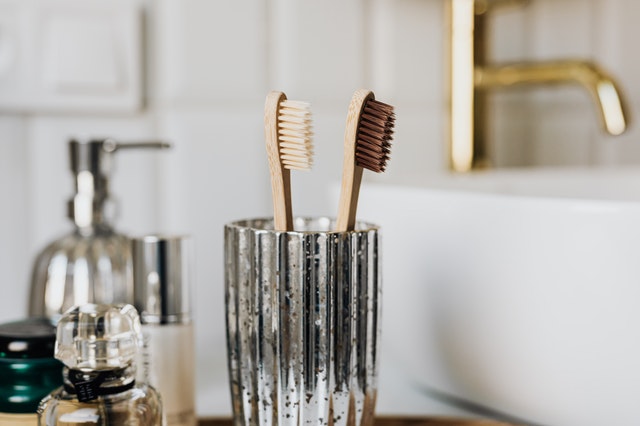
Photo by Karolina Grabowska via Pexels.
Quick verdict
Best for: people who want a simple way to cut back on single-use plastic in their bathroom routine.
Skip if: you prefer electric toothbrushes, need a very specific dentist-recommended brush head, or know you will leave the brush sitting wet in a closed container.
For many households, a bamboo toothbrush is a sensible swap. Just go in with realistic expectations: it is usually lower plastic, not completely plastic-free, and it still needs to be replaced regularly like any other toothbrush.
Pros and cons of bamboo toothbrushes
Pros
- Uses much less plastic than a standard disposable toothbrush.
- Bamboo is fast-growing and renewable.
- The handle is usually compostable at the end of its life.
- Works much like a regular manual toothbrush when you choose the right head and bristle softness.
- Often fits well into a broader low-waste bathroom routine.
Cons
- Most bristles are still made from nylon or another synthetic material.
- The brush needs to dry well between uses to help avoid premature wear.
- Composting and recycling are not always as simple as marketing makes them sound.
- Some people may not like the feel of a wood-based handle.
How do bamboo toothbrushes help the environment?
Bamboo toothbrushes are often promoted as a greener alternative to plastic toothbrushes because the handle comes from a renewable plant material instead of petroleum-based plastic. Bamboo grows quickly, and many varieties are naturally resilient, which can reduce the need for intensive inputs compared with some other crops.
That said, it is worth keeping the eco case honest. A bamboo toothbrush is not impact-free. It still has to be grown, processed, shipped, packaged, and eventually discarded. And because most bristles are synthetic, the whole brush is not usually fully biodegradable in the way many shoppers assume.
Still, if your main goal is to reduce everyday plastic waste in a practical way, bamboo toothbrushes are a reasonable step in the right direction.
No need to worry about taking food from pandas, either. The type of bamboo used for consumer products like toothbrushes is generally not the same bamboo species pandas rely on.
Are bamboo toothbrushes compostable?
Bamboo toothbrushes usually have three main parts: the handle, the bristles, and the small metal staples that hold the bristles in place.
The handle is typically compostable. If you want to compost it at home, remove the bristles first, break the handle into smaller pieces, and bury it a few inches deep in warm, active compost or moist soil. Smaller pieces tend to break down faster.
Home composting can take months, often around six months or longer depending on conditions. Industrial composting may move faster, but access varies by location.
The bristles and staples should generally be removed before composting because they are not usually suitable for home compost.
Can bamboo toothbrushes be recycled?
Sometimes, but it depends on the material and your local recycling system.
To recycle any part of a bamboo toothbrush, separate the pieces first:
- Use pliers to pull out the bristles.
- Remove any visible metal staples.
- Sort each material based on local recycling rules.
The staples are often aluminum or another small metal component, but tiny loose pieces can be hard for recycling systems to capture. If your local program accepts them, it may help to collect them together in a clearly labeled small metal container or wrap them in foil before recycling.
The bristles are usually nylon. In theory, nylon can be recyclable, but in practice, tiny toothbrush bristles are not accepted by many curbside systems. Check your local rules before assuming they can go in the recycling bin.
As for the bamboo handle, composting is usually the simplest end-of-life option. You can also reuse it in small DIY projects, such as garden markers or craft pieces.
How are bamboo toothbrushes made?
The process usually starts by cutting bamboo into pieces sized for toothbrush handles. The bamboo is then smoothed and often heat-treated or carbonized, which can darken the color and help reduce moisture and sugars in the material. After drying, the handles are shaped, polished, and drilled for bristle tufts.
In the final stage, the bristles are inserted into the head, often without glue. Exact manufacturing methods vary by brand, but that is the general idea.
What are bamboo toothbrush bristles made of?
Most modern bamboo toothbrush bristles are made from nylon. That means the handle may be plant-based while the bristles are still plastic-based.
Some brands market alternative bristle materials, but nylon remains common because it is durable, flexible, and familiar to consumers. While boar hair is sometimes presented as a natural alternative, it is not ideal for many people and may feel rougher than standard soft bristles. If you are choosing a toothbrush for comfort and everyday brushing, soft synthetic bristles are usually the safer mainstream option.
Are bamboo toothbrushes safe?
For most people, yes. A bamboo toothbrush is generally safe to use as long as you care for it properly and replace it when worn.
The main practical issue is moisture. Because bamboo is a natural material, it should be allowed to dry thoroughly between uses. Do not store it in a way that leaves water pooling around the handle, especially in a closed container.
If the brush shows visible damage, cracking, persistent odor, or signs of mold, it is time to replace it.
Are bamboo toothbrushes good for your teeth?
Yes, a bamboo toothbrush can clean your teeth just as effectively as a normal manual plastic toothbrush when the brush head and bristle type suit your mouth.
What matters most is not the handle material but the basics:
- Choose a comfortable handle.
- Pick a head size that reaches narrow areas of your mouth.
- Use soft or medium bristles based on your preference and any dental advice you follow.
- Do not brush with too much pressure.
In other words, brush the same way you would with any well-made manual toothbrush.
How to choose a bamboo toothbrush
- Bristle softness: soft is a good default for most people.
- Head size: a smaller head can be easier to maneuver.
- Handle shape: choose one that feels secure in your hand.
- Finish: a smoother handle is usually more comfortable.
- Packaging: if you care about waste reduction, look for minimal plastic packaging.
- End-of-life clarity: brands that clearly explain what is compostable and what is not are usually a better sign than vague eco claims.
Can you boil a bamboo toothbrush?
Boiling is not the best cleaning method for a bamboo toothbrush. Prolonged exposure to heat and water can shorten the life of the handle and add more moisture to a material that already needs to dry well.
A better approach is simple everyday care: rinse it after use, shake off excess water, and let it air dry upright or in a dry, open holder.
How to care for and wash a bamboo toothbrush
- Rinse thoroughly after brushing.
- Shake off excess water.
- Store it upright where air can circulate.
- Avoid closed containers that trap moisture.
- Do not let water collect at the bottom of the holder.
- Replace it if the bristles fray, the handle cracks, or the brush develops mold or persistent odor.
The goal is not to over-sanitize it. It is to keep it clean and dry enough that the handle lasts through normal use.
How often should you replace a bamboo toothbrush?
Just like a conventional manual toothbrush, a bamboo toothbrush should generally be replaced every three months or sooner if the bristles start to fray.
If you want a mainstream benchmark, that timing matches the common guidance many dentists and dental organizations give for manual toothbrush replacement.
What is a bamboo charcoal toothbrush?
A bamboo charcoal toothbrush is typically just a bamboo-handled toothbrush with bristles infused with charcoal.
Some brands make strong claims about charcoal bristles, but it is better to keep expectations modest. Charcoal is often marketed for freshness or whitening, yet the overall cleaning performance still depends much more on brushing technique, bristle softness, and regular replacement than on trendy add-ons.
It is also wise to be skeptical of sweeping claims about antibacterial, antifungal, or antiviral effects in everyday consumer toothbrushes. If you like charcoal bristles, fine, but do not assume they are automatically better for everyone.
How much do bamboo toothbrushes cost?
Costs vary by brand, pack size, and materials. In many cases, bamboo toothbrushes are sold in multi-packs and can be reasonably affordable compared with other low-waste personal care swaps.
As always, compare packaging, materials, and replacement frequency rather than focusing only on the per-brush price.
Best for and skip if
Best for:
- Low-waste beginners who want an easy bathroom swap.
- Households trying to reduce plastic use without changing brushing habits too much.
- People already exploring other bamboo home goods and personal care products.
Skip if:
- You strongly prefer electric toothbrushes.
- You need a specialty brush recommended by your dentist or orthodontist.
- You are unlikely to keep the handle dry between uses.
Final takeaway
Bamboo toothbrushes are not a perfect zero-waste solution, but they are still a practical way to cut down on disposable plastic in a daily routine. The most important things are choosing a brush that feels good to use, drying it properly, and replacing it on time.
If you are building out a more sustainable bathroom setup, you may also want to browse our bamboo bathroom and personal care guides or the broader bamboo bathroom products guide.
Looking for more bamboo FAQ-style explainers? See our guides on bamboo cutting boards, bamboo steamers, bamboo toilet paper, and bamboo blinds.
Have another question we should add? Contact us or send a topic idea to ContactUs@tropicjade.com.